Ditch the Drag-and-Drop: Why Custom WordPress Themes Reign Supreme
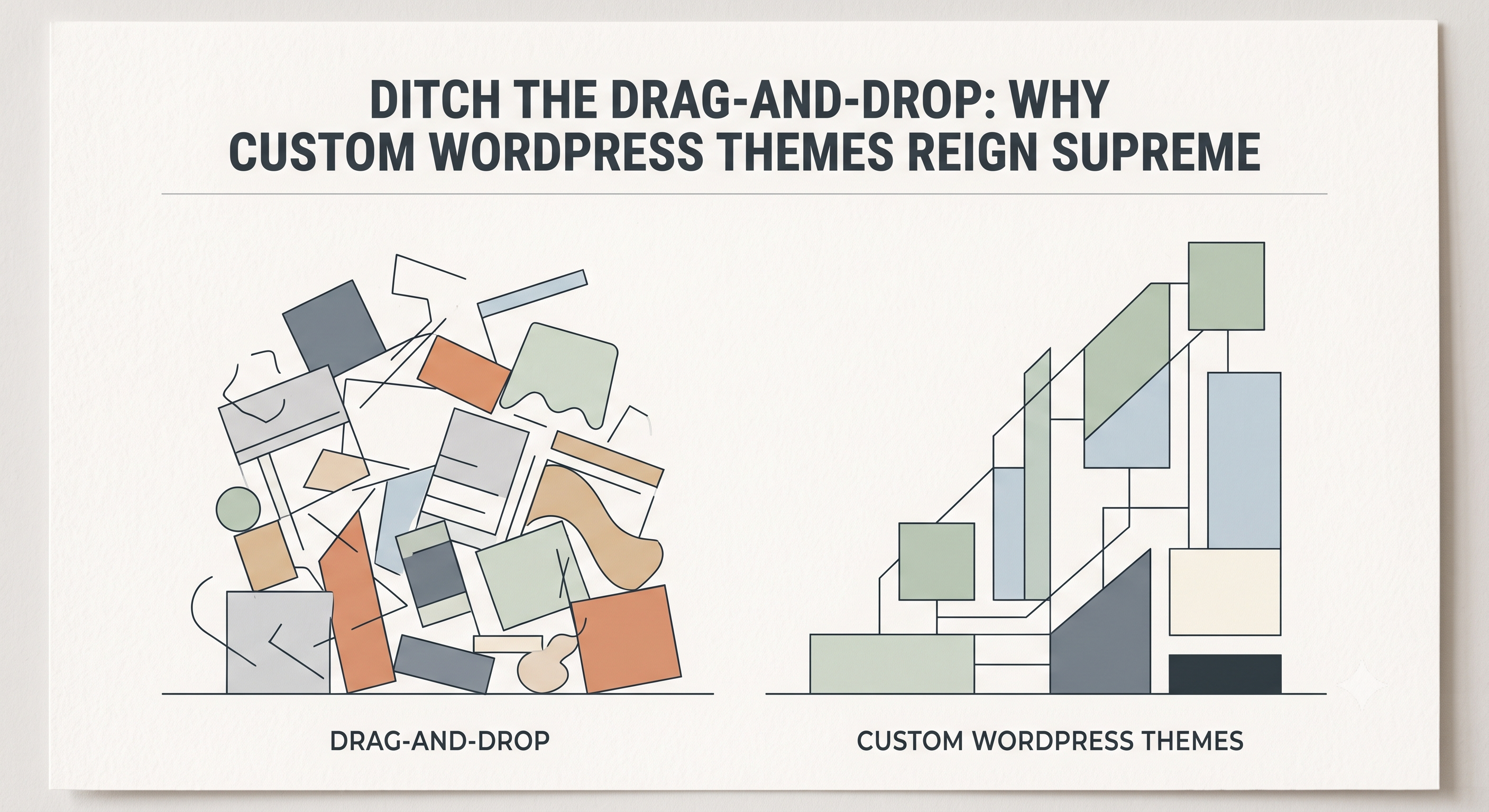
There’s no denying the immediate allure of a WordPress page builder. Tools like Elementor, Divi, and Beaver Builder promise design freedom without a single line of code, letting you drag, drop, and click your way to a stunning website in hours. For many small projects or those just dipping their toes into web design, this seems like a godsend. But having spent years in the trenches of WordPress development, I’m here to tell you that this apparent simplicity often comes at a steep, hidden cost. For any serious project demanding performance, scalability, and true modularity, stepping away from the drag-and-drop paradigm and embracing custom-coded themes is not just an option—it’s a necessity.
The most immediate and often painful drawback of page builders is their impact on performance. While they allow for rapid visual development, they typically achieve this by injecting an incredible amount of extraneous code into your site. Think about it: every module, every setting, every style option you *might* use contributes to a hefty payload of CSS and JavaScript, much of which goes unused on any given page. This leads to bloated HTML, excessive DOM elements, and slow loading times that directly impact your user experience and, crucially, your search engine rankings. Core Web Vitals are increasingly important, and a site bogged down by a page builder’s overhead is fighting an uphill battle from the start. A custom theme, on the other hand, can be meticulously crafted to load only what’s absolutely necessary, resulting in lightning-fast performance that both users and Google will love.
Beyond speed, custom themes offer unparalleled modular scalability. When you build a theme from scratch, you design it with specific components in mind. Using tools like Advanced Custom Fields (ACF) or WordPress’s native Blocks API, you create reusable, efficient modules that clients can easily populate with content. Need a new hero section? Instead of wrestling with a page builder’s global styles or duplicating complex layouts, you simply develop a new, lean block or flexible content field. This approach fosters a cleaner, more maintainable codebase. Adding new features or modifying existing ones becomes a precise, surgical task rather than a precarious act of prodding at an interconnected, opaque builder interface. Your site becomes a robust, extensible platform, not a fragile house of cards built on a proprietary system.
From a developer’s perspective, the control a custom theme offers is liberating. You dictate the exact structure, semantics, and functionality of every element. There's no fighting against a page builder's opinionated HTML output or struggling to override inline styles with "!important" flags. You have direct access to the WordPress templating hierarchy, the enqueue system, and the database, allowing for optimized queries and bespoke functionalities that would be cumbersome, if not impossible, within a page builder’s constraints. This means cleaner code, fewer conflicts, and a much more enjoyable development process that yields superior results.
While the initial investment in a custom-coded theme might seem higher or take a little longer to develop, the long-term value it delivers far outweighs the perceived upfront savings of a page builder. You get a site that is faster, more secure, easier to maintain, and truly future-proof. You avoid vendor lock-in, ensuring that your site isn't beholden to a specific builder's updates or discontinuation. For businesses and individuals serious about their online presence, a custom WordPress theme isn’t just a fancy alternative; it's the intelligent, strategic choice for a high-performing, scalable, and enduring web presence. Make the leap from drag-and-drop to programmatic elegance – your website will thank you.