Ditching Divi: Why I Code My WordPress Themes From Scratch
My journey with WordPress began, like many, with the seductive promise of visual drag-and-drop. Tools like Elementor and Divi offered immediate gratification, allowing me to build pages quickly without touching a line of code. For basic sites, they felt like magic. I could see my vision come to life in real-time, moving elements around with satisfying ease. But as my projects grew in complexity and my clients demanded more bespoke functionality and razor-sharp performance, my initial enthusiasm for page builders began to wane, slowly replaced by a growing frustration.
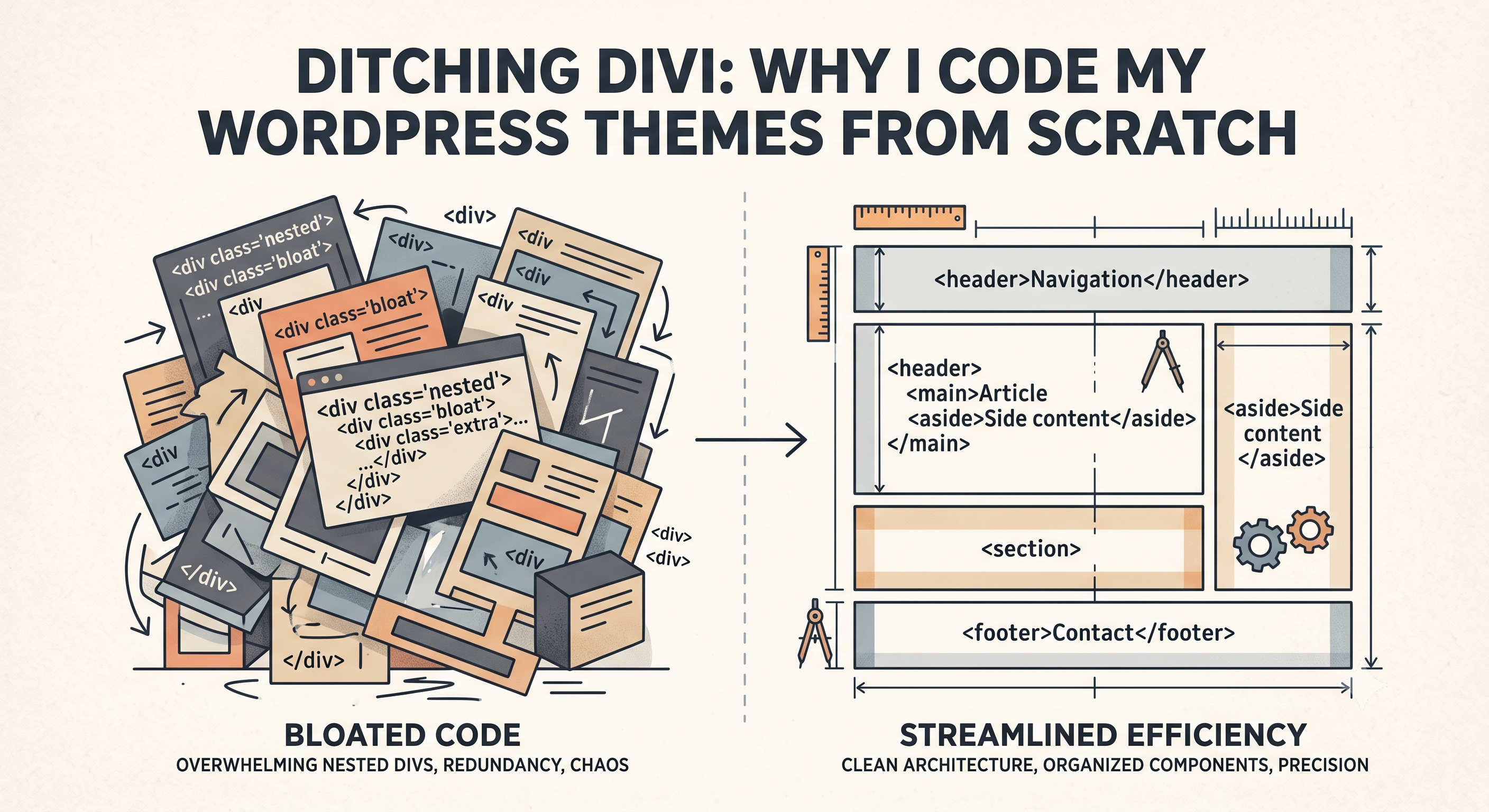
The first glaring issue was, invariably, performance. Every page builder, by its very nature, adds layers of abstraction, injecting a hefty amount of unnecessary CSS and JavaScript into every page. They generate complex, often redundant HTML structures – div-ception, as I like to call it – that browsers have to parse. The result? Slower load times, lower Lighthouse scores, and a tangible drag on user experience. I found myself spending countless hours trying to optimize away the bloat generated by these very tools, a frustrating exercise in fighting the system rather than building with it. With a custom-coded theme, I load only what’s absolutely essential. My stylesheets are tailored precisely to the design, my JavaScript is minimal and optimized, and the HTML is clean, semantic, and efficient. This translates directly to lightning-fast load times, happier users, and better search engine rankings – a clear win on all fronts.
Beyond raw speed, there's the critical aspect of modularity and scalability. When you build with a page builder, you're intrinsically tied to its ecosystem. Want to make a fundamental change to how a component functions across your site? Often, you have to edit each instance individually, or wrestle with the page builder’s limited global settings. Integrating truly custom functionality or advanced third-party APIs can be a nightmare, often requiring workarounds that are fragile and difficult to maintain. Custom themes, however, are built with modularity at their core. I design and code reusable components using Advanced Custom Fields, custom post types, and well-structured PHP and SCSS. This approach allows me to build a robust, flexible foundation. Need to add a new feature? I can create a new component, integrate it seamlessly, and know that it won’t break existing layouts or add unnecessary code to pages where it's not used. This level of granular control is simply unattainable with page builders.
Furthermore, a custom-coded architecture offers unparalleled future-proofing and maintainability. Page builders are constantly updated, and while this is generally a good thing, major version changes or even minor updates can sometimes introduce breaking changes or deprecated features, forcing you into reactive development. Should a particular page builder fall out of favor or cease development, migrating your content and design can be an monumental task, often requiring a complete rebuild. With a custom theme, you own the code. You dictate the architecture, the dependencies, and the update schedule. This provides a level of stability and long-term viability that offers immense peace of mind. While the initial learning curve for custom coding might seem steeper, the investment pays dividends in the form of superior performance, ultimate flexibility, and enduring control over your digital assets. It's about having full ownership, from the semantic HTML to the precisely tailored JavaScript, ensuring your website is a lean, mean, perfectly tuned machine built to last.