Ditching the Drag-and-Drop: My Journey to Faster WordPress with FlyntWP
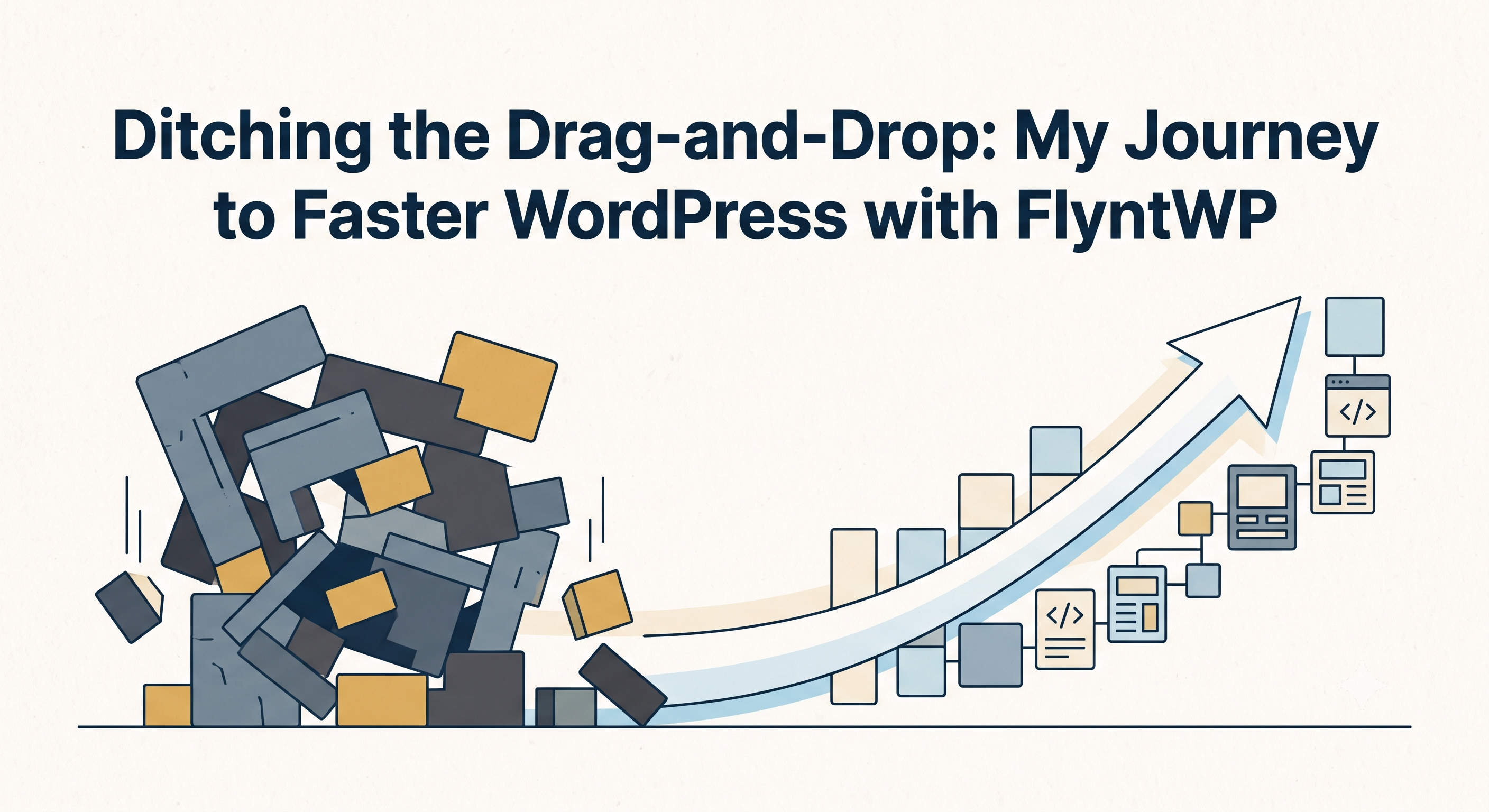
I've spent years building WordPress sites, and while page builders promised speed and ease, they often delivered bloat. The initial joy of drag-and-drop quickly turned into frustration with sluggish load times, mountains of unnecessary HTML, and a general feeling of losing control over the very code I was trying to write. You know the drill: beautiful designs crippled by dozens of nested divs and inline styles, all leading to disappointing performance metrics. This struggle became my personal crusade for a better way to build with WordPress, one that respected both developer efficiency and end-user experience.
That's when I discovered FlyntWP, and it felt like a breath of fresh air. It isn't another page builder trying to emulate Gutenberg or Elementor. Instead, FlyntWP positions itself as a truly lightweight, programmatic alternative, empowering developers to build custom WordPress themes with precision and efficiency, completely sidestepping the performance pitfalls of those slow low-code page builders. It’s about taking back control of your output, delivering a genuinely performant website.
At its heart, FlyntWP champions modular Twig components. This isn't just a fancy term; it's a fundamental shift in how you structure your theme. Imagine breaking down your website into small, independent, reusable blocks – a hero section, a call-to-action, a testimonial slider. Each of these becomes a Twig component, self-contained and easily integrated. This approach fosters incredible consistency, reduces redundancy, and makes maintenance a breeze. Building complex layouts becomes a process of assembling these well-defined pieces, not wrestling with an over-engineered visual editor.
FlyntWP’s integration with ACF Pro is nothing short of brilliant. While other systems might use ACF as a backend for a visual builder, FlyntWP leverages it as it was always intended: a powerful custom field manager. We define our fields with ACF Pro, mapping them directly to our Twig components. This means content editors get a clear, intuitive interface in the WordPress admin to manage text, images, and settings for each component, without ever touching a frontend builder. It’s content management done right, separating content from presentation flawlessly, ensuring a clean content model.
If you're tired of waiting for Webpack or Gulp to churn through your assets, FlyntWP’s adoption of Vite will be a revelation. This modern frontend toolchain delivers blistering fast build speeds and instant hot module reloading during development. Changes to your CSS or JavaScript appear almost instantaneously in your browser, drastically accelerating your workflow. This isn’t just a convenience; it’s a game-changer for developer productivity, allowing for rapid iteration and a much more enjoyable coding experience. It fundamentally shifts the pace of development.
Perhaps one of FlyntWP’s most compelling benefits, and one often overlooked in the low-code world, is its commitment to clean DOM structures. Because you’re writing the Twig templates directly, you have absolute control over the HTML output. This means no unnecessary wrapper divs, no inline styles, no bloated scripts injecting extraneous markup. The result? Lean, semantic HTML that loads incredibly fast. This granular control is precisely what's needed to optimize for flawless Core Web Vitals, ensuring excellent Lighthouse scores, better SEO, and a superior user experience. Forget wrestling with bloated frameworks; FlyntWP lets you craft performance from the ground up.
This whole philosophy positions FlyntWP as the definitive lightweight, programmatic alternative to the status quo. It's for those of us who appreciate the power of WordPress but demand more control and better performance than what traditional slow low-code page builders can offer. It's about empowering developers to build sites that are not just beautiful, but also performant, maintainable, and scalable, without compromising on the client content editing experience.
If you’re a developer who has grown weary of the performance compromises inherent in most low-code solutions, and you’re looking for a way to build truly custom, high-performance WordPress sites that will delight both clients and search engines, I wholeheartedly recommend diving into FlyntWP. It’s given me back the joy of building on WordPress, proving that you don’t have to sacrifice speed or code quality for a streamlined development process. It’s the future of custom WordPress development, built on solid, modern principles.