From Bloat to Brilliance: Unpacking the Power of Custom-Coded WordPress Themes
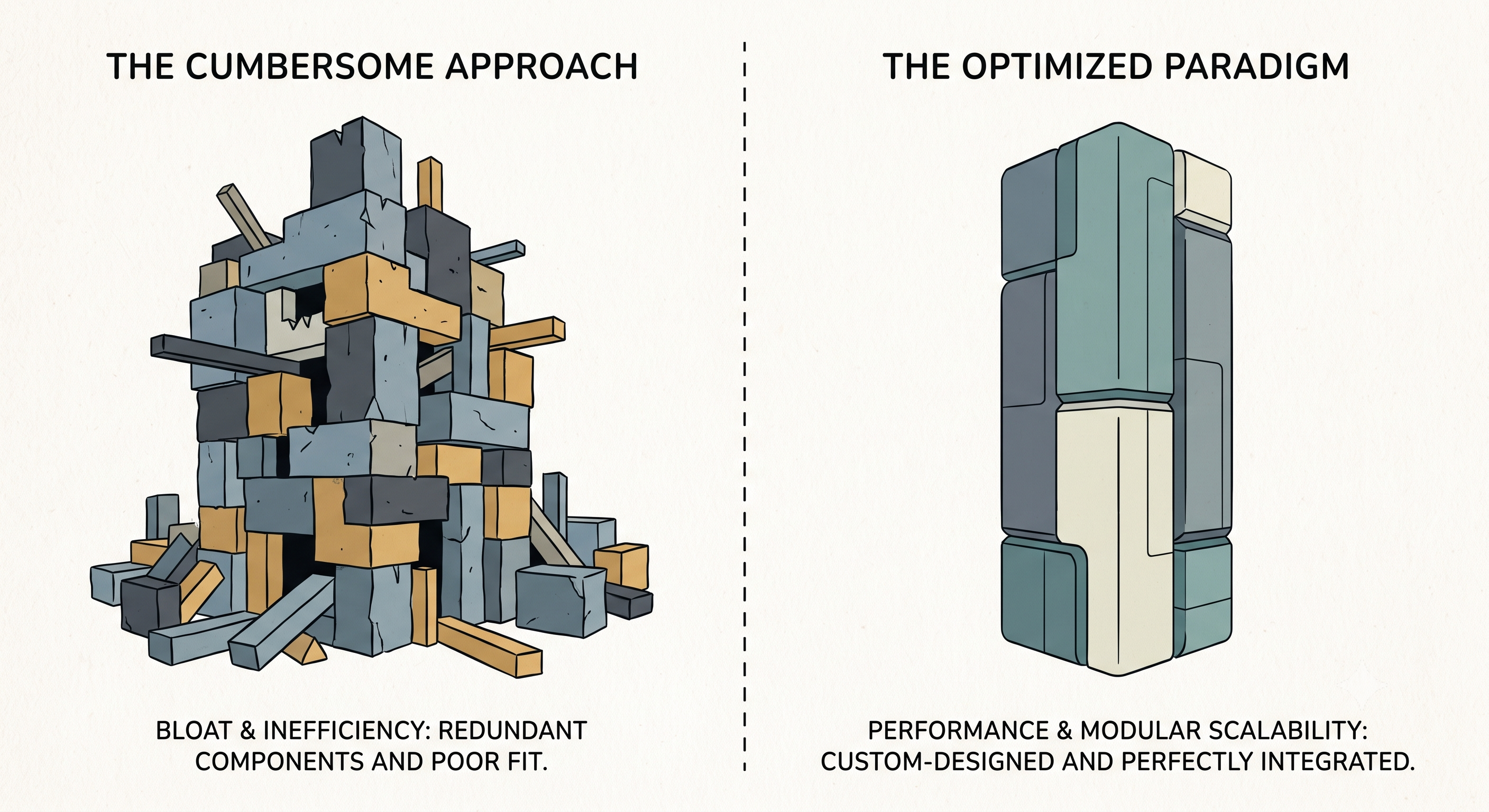
Let's talk WordPress. For years now, the digital landscape has been dominated by the allure of "easy." Page builders like Elementor and Divi have promised beautiful websites with a drag-and-drop interface, making web design accessible to just about anyone. And for many use cases, they deliver on that promise. But as a developer, I've come to see a critical fork in the road, one where programmatic, custom-coded architecture consistently outperforms the low-code convenience when true performance and modular scalability are paramount.
My primary beef with page builders starts with performance. While they've certainly evolved, the fundamental way they operate often leads to bloat. Think about it: to offer ultimate flexibility, they have to load a vast amount of CSS and JavaScript that might never even be used on a particular page. Every module, every styling option, every interactive element comes with its own baggage. This translates directly into slower page load times, lower scores on Lighthouse and GTmetrix, and ultimately, a poorer user experience. Your visitors are impatient; every millisecond counts, impacting everything from bounce rates to SEO rankings. With a custom theme, I write only the code that's absolutely necessary for your specific design and functionality. This surgical approach results in incredibly lean, fast-loading sites that sing on modern browsers and mobile devices.
Beyond speed, there's the crucial aspect of modular scalability. When I build a custom WordPress theme, I'm thinking about the future. I architect the site using reusable components, often integrating with tools like Advanced Custom Fields (ACF) or leveraging WordPress's native block editor (Gutenberg) to create truly custom blocks. This means if you need a new type of content section or a minor design tweak down the line, it’s not about wrestling with a page builder’s often restrictive interface or trying to override styles with messy custom CSS. Instead, it’s about plugging in a new module, adjusting a template part, or creating a new custom block that seamlessly integrates with the existing structure. This approach makes updates easier, development faster for subsequent phases, and maintenance a dream. You own the code; it's clean, predictable, and extensible.
Page builders, by their nature, can create a "vendor lock-in" scenario. Should you ever decide to move away from Elementor or Divi, you're often left with a tangled mess of shortcodes or database entries that represent your content and design, making migration or complete redesigns far more complicated and costly than they need to be. A well-built custom theme, on the other hand, structures content in native WordPress ways, ensuring that your data remains portable and accessible.
Moreover, custom coding offers unparalleled control. I can achieve pixel-perfect designs without fighting against a page builder's default styling or struggling to implement unique animations or interactions. If you have a specific vision for your brand and user experience, custom code is the only way to realize it without compromise. It’s the difference between buying a pre-fabricated house and commissioning an architect to build your dream home from the ground up – one fits a general need, the other is tailored precisely to your unique specifications.
In conclusion, while page builders serve a valuable purpose for rapid prototyping or simple informational sites, when you're serious about your online presence – when performance, long-term scalability, unique branding, and ultimate control are non-negotiable – the investment in a custom-coded WordPress theme pays dividends. It’s an investment in a faster, more robust, and infinitely more adaptable digital foundation for your business. Don't just build a website; engineer a digital asset that performs.