Sculpting Maintainable WordPress: Why Sage is My Go-To for Clean Code
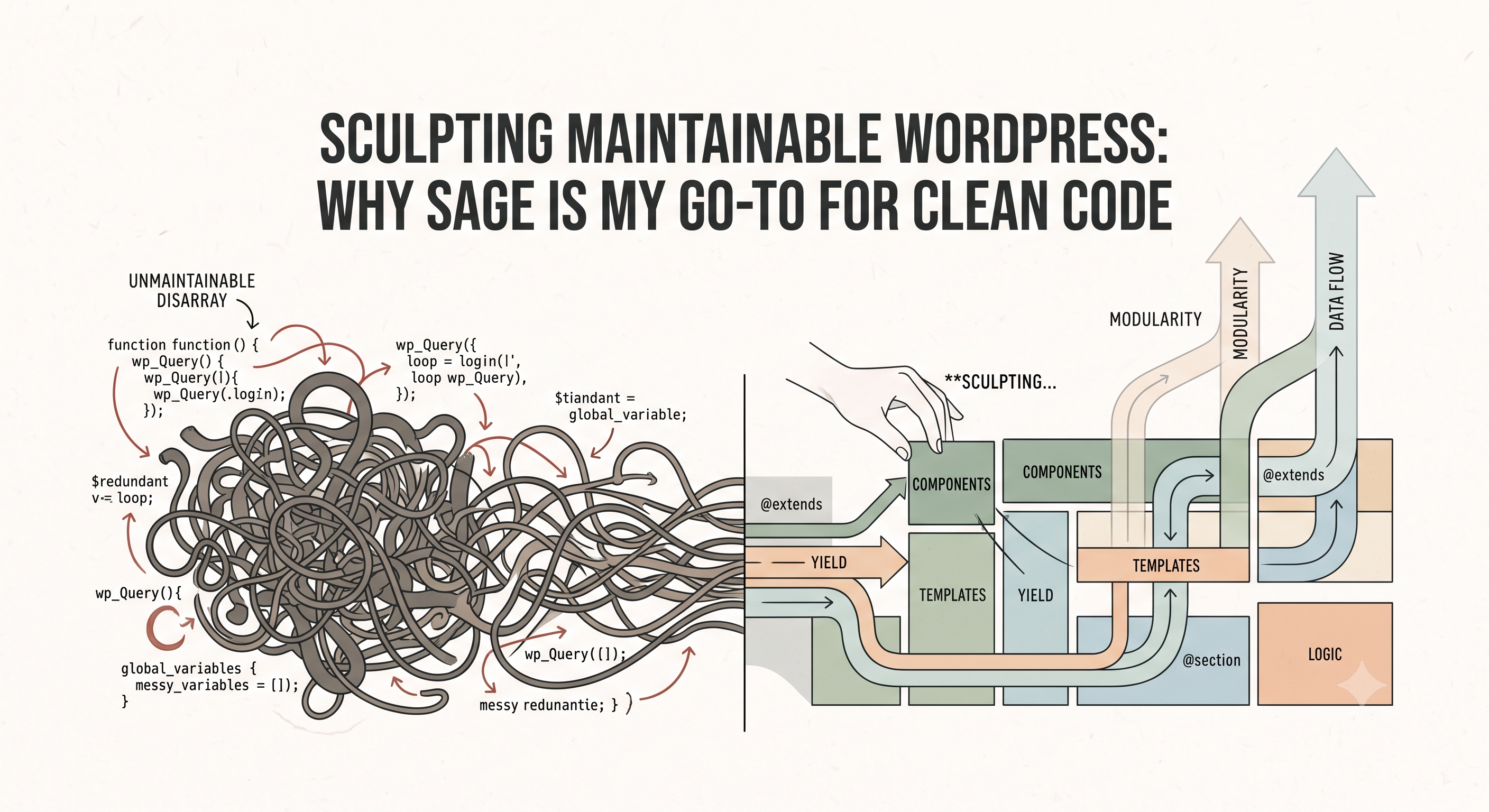
I've been building WordPress sites for years, and I've seen firsthand how quickly a project can spiral into an unmaintainable mess. We've all been there: tangled template files riddled with PHP logic, global variables flying everywhere, and the creeping dread of opening a six-month-old codebase. This problem is only exacerbated by the likes of Divi or Elementor, tools that promise quick visual builds but often deliver a bloated database and a site that’s impossible to debug or extend programmatically. My solution, and frankly, my evangelism, centers entirely around Sage, the modern WordPress theme framework built by Roots.
Sage completely reimagines WordPress theme development, bringing a refreshing, almost MVC-like architecture to a platform often criticized for its lack of structure. It's built on a foundation of Laravel components, meaning you're not just getting a "theme"; you're getting a fully featured application structure within WordPress. This empowers me to write clean, organized, and truly maintainable code, moving light-years beyond the procedural spaghetti that defines so many traditional WordPress projects. It transforms theme development from a frustrating exercise in workarounds into a satisfying journey of engineering.
One of Sage's most significant contributions to this clean architecture is its embrace of Blade for templating. If you've worked with Laravel, you'll know Blade. It allows me to keep my templates strictly presentation-focused. This means no complex PHP logic, no database queries, and no business rules cluttering up the HTML. My Blade files are beautiful, readable blueprints of the UI, making it incredibly easy for any front-end developer to step in and tweak markup or styling without needing to understand the underlying PHP application logic. This separation of concerns is fundamental to building scalable and collaborative projects.
The magic of getting data into those pristine Blade templates happens elegantly through View Composers. Instead of dumping data directly into the template file or relying on global WordPress variables, View Composers act as the bridge, preparing and injecting data into specific views or sets of views. This allows me to centralize all the data fetching and processing logic – whether it's querying custom post types, preparing ACF fields, or pulling data from an external API – in dedicated PHP classes. My templates receive exactly what they need, already processed and ready for display, maintaining that crucial presentation-only purity.
Underpinning much of Sage's modern approach is Acorn, the glue that brings Laravel's powerful application container and dependency injection capabilities directly into WordPress. With Acorn, I can register services, manage class dependencies, and configure my theme in a way that feels utterly alien to traditional WordPress development, but entirely familiar and welcome to anyone who's built a modern PHP application. This means I can write testable code, inject services where needed, and avoid the rampant use of global variables or static methods that often plague older WordPress codebases. It’s about building a robust, programmatic foundation, not just a collection of files.
When I compare this organized, programmatic codebase with the sprawling, often inscrutable output of page builders like Divi or Elementor, the difference is night and day. Page builders, while offering a rapid visual design experience, invariably produce unmaintainable database bloat, introduce performance bottlenecks, and lock you into their specific ecosystem. Trying to debug or extend a feature on a page builder site often means wading through layers of obscure markup and shortcode parsing, whereas with Sage, I'm working with a clear, logical application structure that I have full control over.
For me, Sage isn't just another WordPress theme framework; it's a philosophy. It’s a commitment to building WordPress sites the right way: with clean code, modern development practices, and an architecture that prioritizes maintainability and scalability from day one. If you’re a developer who’s tired of fighting against WordPress’s historical tendencies and yearns for a structured, enjoyable development experience, I genuinely believe Sage, with its Blade templating, View Composers, and Acorn-powered dependency injection, is the clear choice for truly professional WordPress projects.