Taming WordPress Bloat: Why I Choose FlyntWP for Lean, Lightning-Fast Builds
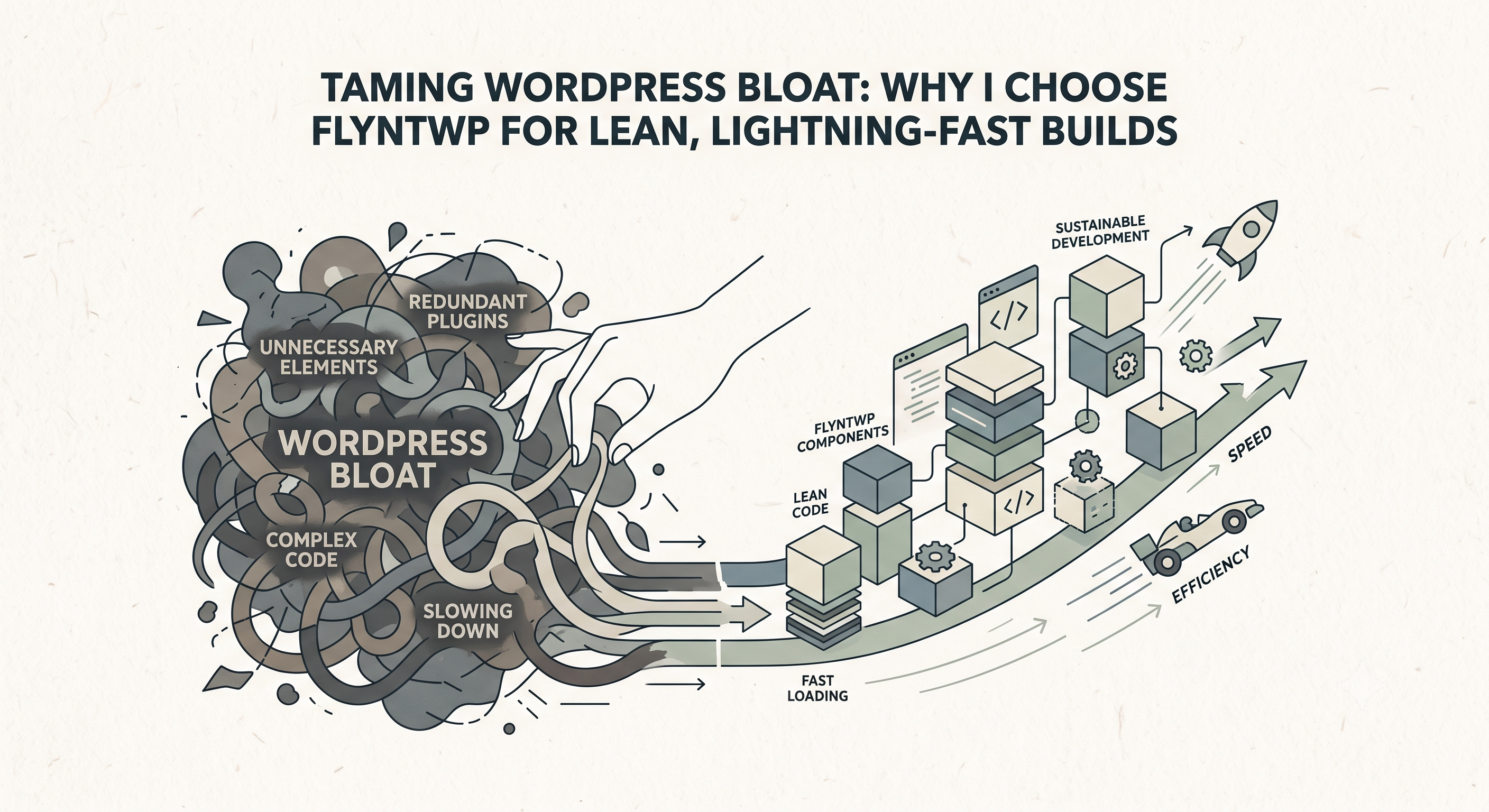
I've been in the WordPress trenches for a long time, and like many of you, I’ve wrestled with the promise and the peril of page builders. On one hand, they offer rapid visual development; on the other, they often deliver a bloated, slow, and messy codebase that’s a nightmare to maintain and impossible to optimize for true performance. My journey led me to a different path, a better way to build custom WordPress sites that are both powerful for content editors and a joy for developers: FlyntWP. This framework has truly transformed how I approach WordPress development, offering a lightweight, programmatic antidote to the heavy-handed low-code solutions prevalent today.
The core philosophy behind FlyntWP is elegant simplicity and robust control. Instead of drag-and-drop elements that generate mountains of redundant HTML and inline CSS, FlyntWP champions modular Twig components. This approach means I’m building with discrete, reusable blocks of logic and presentation. Each component, whether it's a hero section, a rich text editor, or a gallery, is self-contained. This not only keeps my code incredibly organized and readable, but it also means I can update or modify a component in one place, and those changes propagate everywhere it's used. It’s a developer’s dream for maintainability and scalability, preventing the Frankenstein monster of code that often emerges from complex page builder sites.
What makes this component-based approach truly shine for content creators is its seamless integration with ACF Pro. This isn’t just a side feature; it’s fundamental to the FlyntWP experience. I use ACF Flexible Content fields to empower clients to build pages with these predefined modules, giving them the flexibility they need without ever touching code. They select a component, fill in the custom fields I’ve defined (text, images, links, etc.), and the Twig template renders it beautifully and correctly every single time. It's the perfect balance: clients get powerful content creation tools, and I, as the developer, retain complete control over the markup and styling. There’s no guessing game about what the output HTML will look like, because I’ve explicitly defined it.
Speed isn't just about the final website; it's also about the development process. This is where FlyntWP's modern build tooling, powered by Vite, really comes into its own. Gone are the days of sluggish Webpack compilations that bring my development flow to a grinding halt. With Vite, I experience lightning-fast hot module reloading (HMR) during development. I make a CSS or Twig change, hit save, and the browser updates almost instantly. This rapid feedback loop makes development incredibly efficient and enjoyable, allowing me to focus on crafting great user experiences rather than waiting for my build process to catch up. It’s a massive productivity booster that directly translates into quicker project delivery.
Perhaps the most critical advantage, especially in today's performance-driven web, is FlyntWP’s commitment to clean DOM structures and excellent Core Web Vitals scores. The very nature of modular Twig components and explicit ACF field definitions ensures that the HTML output is lean, semantic, and free from the unnecessary divs, nested wrappers, and inline styles that plague most page builder outputs. FlyntWP sites are designed from the ground up to be performant. By controlling every byte of output, I can optimize for minimal CSS, efficient JavaScript loading, and ideal image delivery. This programmatic control translates directly into flawless Core Web Vitals scores—lighting-fast Largest Contentful Paint, minimal Cumulative Layout Shift, and superb First Input Delay. This isn’t just good for SEO; it’s fundamentally better for user experience, making my clients’ websites not just functional, but genuinely fast and delightful to use.
For me, FlyntWP isn't just another WordPress framework; it's a philosophy that prioritizes performance, maintainability, and developer sanity without sacrificing content editor flexibility. It’s the ideal choice for anyone looking to build bespoke WordPress sites that stand apart in speed, cleanliness, and robustness from the typical low-code solutions. If you’re tired of fighting against bloated page builders and yearn for a more elegant, controlled, and genuinely fast way to build, I strongly encourage you to explore FlyntWP. It’s empowered me to deliver better websites, faster, and I believe it can do the same for you.