Tired of Bloat? Why FlyntWP is My Go-To for Lean, Fast WordPress Sites
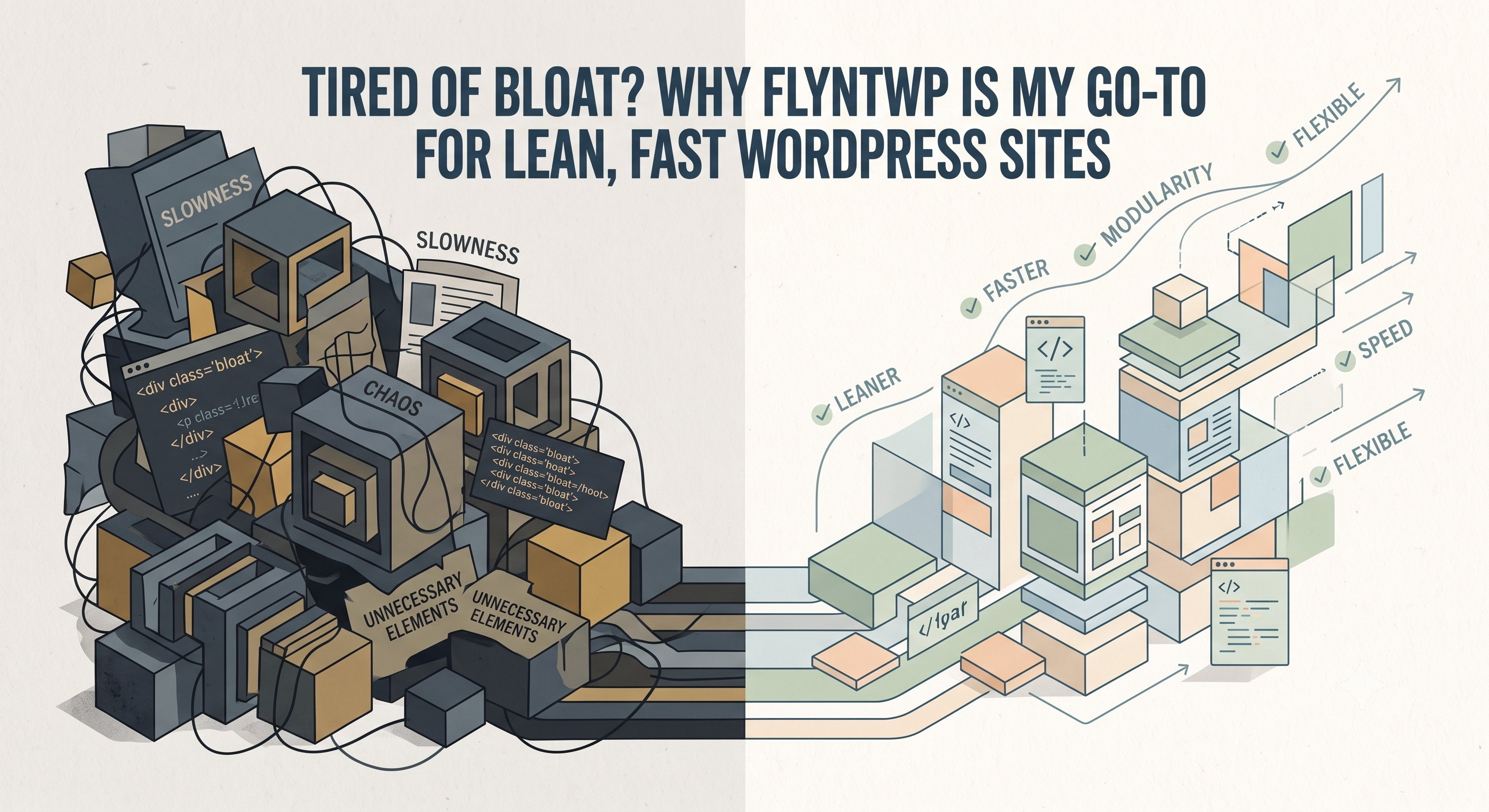
For years, I found myself in a constant battle with WordPress page builders. While they promised quick site launches, the reality was often a slow, bloated mess of unnecessary divs, inline styles, and convoluted scripts. The dream of a lightweight, performant website quickly faded under layers of technical debt and frustratingly low Core Web Vitals scores. That’s why discovering FlyntWP was such a game-changer for me; it presented the truly programmatic alternative I’d been searching for, allowing me to build precisely what I needed without the performance compromises.
What sets FlyntWP apart immediately is its fundamental approach to site construction. Instead of relying on a drag-and-drop interface that abstracts away the underlying code, FlyntWP champions modular Twig components. This means I'm defining reusable, atomic pieces of my interface – a hero section, a card, a CTA – in clean, readable Twig templates. This not only promotes consistency across the site but drastically speeds up development, as I’m composing sites from battle-tested components rather than recreating elements from scratch or wrestling with a builder’s unpredictable output. It’s a developer-first methodology that pays dividends in terms of maintainability and scalability.
This modularity integrates flawlessly with ACF Pro, which is where the real power for content editors comes in. We build out flexible content fields within ACF to define the editable areas for each Twig component. Editors get a clear, intuitive interface to manage content, images, and links for each component without ever touching code, while I retain full control over the markup and styling. It’s the perfect balance: powerful content management for the client, and clean, uncompromised code for the developer, ensuring the site’s structure remains rock-solid and predictable.
The developer experience with FlyntWP is further supercharged by its use of Vite for asset compilation. If you’ve ever waited ages for Webpack to compile, Vite is a revelation. Development servers spin up almost instantly, and hot module reloading (HMR) means I see changes reflected in the browser in real-time, without a full page refresh. This dramatically accelerates my workflow, allowing for rapid iteration and a much more enjoyable development process. Fast builds mean more time building and less time waiting, which translates directly to efficiency and faster project delivery.
Crucially, all of these architectural choices culminate in websites that boast incredibly clean DOM structures. Without the extraneous markup generated by traditional low-code page builders, FlyntWP sites are lean, semantic, and highly optimized from the ground up. This isn’t just about aesthetics; it’s the cornerstone of achieving flawless Core Web Vitals. Lighthouse scores consistently show top-tier performance because there's no bloat holding the site back. Faster load times, better interactivity, and a smoother user experience directly contribute to higher SEO rankings and improved conversion rates for my clients.
Ultimately, FlyntWP isn't just another way to build WordPress sites; it's a paradigm shift towards intelligent, performance-driven development. It empowers me to deliver bespoke, lightning-fast solutions that meet modern web standards and user expectations, all while maintaining complete control and enjoying a truly efficient development workflow. If you're tired of fighting against slow, bloated page builders and ready to embrace a leaner, more programmatic approach to WordPress, I genuinely believe FlyntWP is the answer you’ve been looking for.